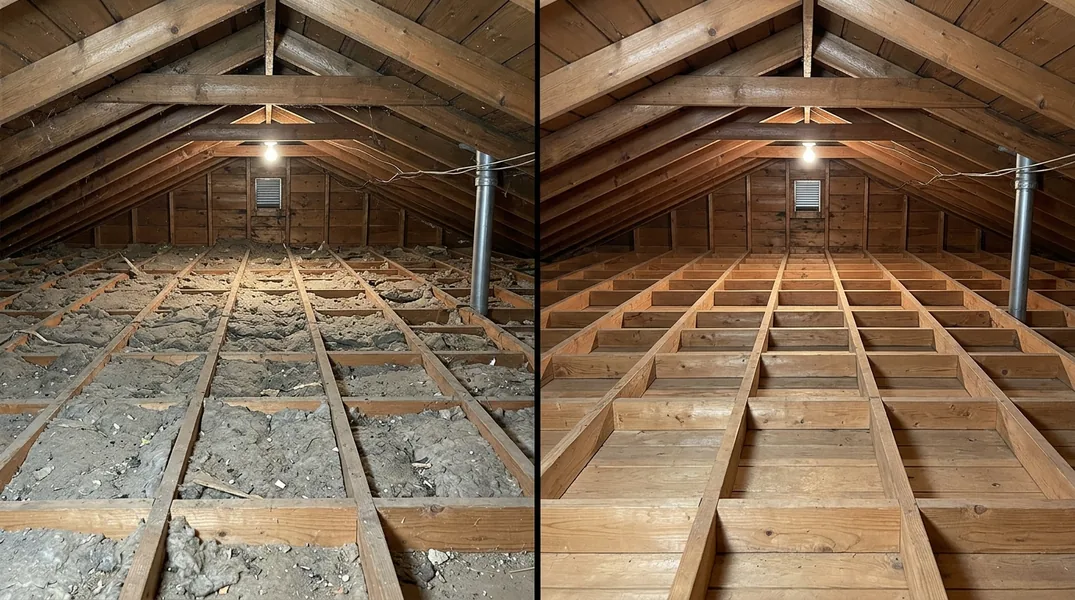
Understanding Spray Foam Insulation: Open-Cell vs Closed-Cell
When you're considering Attic Spray Foam Insulation for your home in Fargo, one of the first decisions you'll face is choosing between open-cell and closed-cell spray foam. Both are excellent insulation materials, but they work differently and offer distinct advantages depending on your specific needs. Understanding these differences is crucial to making an informed decision that will protect your home and save you money on energy bills for years to come.
The core difference lies in how the foam cells are structured. Open-cell spray foam has cells that are not completely encapsulated, allowing air and moisture to pass through the foam. Closed-cell spray foam, by contrast, has cells that are tightly sealed, creating a barrier that blocks both air and moisture. This fundamental structural difference affects everything from insulation performance to moisture resistance to cost. For homeowners in Fargo dealing with harsh winters and potential moisture issues, this distinction matters significantly.
Open Cell Spray Foam: Benefits and Best Uses
Open Cell Spray Foam Insulation is a lighter, more flexible material that expands significantly during installation, filling gaps and cavities thoroughly. Because the cells remain open, this type of foam allows moisture vapor to pass through it, which means it's less likely to trap moisture in your walls or attic. This characteristic makes it particularly useful in applications where vapor permeability is beneficial, such as interior wall cavities where you want the wall assembly to dry out if needed.
The spray foam R value for open-cell foam typically ranges from R-3.5 to R-3.8 per inch of thickness. While this is lower than closed-cell options, open-cell foam still provides excellent insulation performance and is often sufficient for many residential applications. Additionally, open-cell foam is generally more affordable than its closed-cell counterpart, making it an attractive option for homeowners working within a budget. The material is also easier to cut and trim after installation, and it doesn't require as much protective equipment during application, which can reduce labor costs.
Closed Cell Spray Foam: Superior Performance and Protection
Closed Cell Spray Foam Insulation is denser and more rigid than open-cell foam, creating a more robust thermal and moisture barrier. The closed-cell structure means that air and moisture cannot pass through the foam, providing superior protection against infiltration and condensation. This makes closed-cell foam ideal for attics, basements, and crawl spaces where moisture control is critical. For homeowners in Fargo experiencing the region's significant temperature swings and seasonal moisture variations, this protection can be invaluable.
The closed cell spray foam R value is significantly higher, ranging from R-6 to R-7 per inch of thickness. This superior insulating power means you need less material to achieve the same thermal resistance as open-cell foam, which can be advantageous in space-constrained applications. The denser structure also provides structural reinforcement to walls and attics, improving rigidity and potentially enhancing the building's overall integrity. While closed-cell foam costs more upfront and requires specialized equipment and training for proper installation, the long-term energy savings and enhanced protection often justify the investment for many homeowners.
Spray Foam R Value Comparison: What You Need to Know
Understanding R-value is essential when comparing insulation options. R-value measures thermal resistance, with higher numbers indicating better insulating performance. The difference between open-cell and closed-cell foam R values is substantial. Open-cell foam delivers approximately R-3.5 to R-3.8 per inch, while closed-cell foam provides R-6 to R-7 per inch. This means that to achieve an R-30 rating, you'd need about 8 to 9 inches of open-cell foam but only about 4.5 to 5 inches of closed-cell foam.
However, R-value alone doesn't tell the complete story. While closed-cell foam's higher R-value per inch is impressive, the choice between open-cell and closed-cell should also consider your home's specific climate conditions, moisture profile, and budget. In Fargo's climate, where winter temperatures can plummet and spring moisture can be problematic, the moisture resistance of closed-cell foam often provides additional benefits beyond its raw R-value. Conversely, if your primary concern is cost-effective insulation for a dry area, open-cell foam's respectable R-value may be entirely adequate for your needs.
Attic Spray Foam Insulation Near Me: Choosing the Right Type for Your Fargo Home
Your attic is one of the most critical areas for insulation, as heat rises and escapes through the roof if not properly sealed and insulated. When selecting between open-cell and closed-cell options for your attic, several factors come into play. Closed-cell foam is often preferred for attics because it provides superior moisture protection, prevents air leakage more effectively, and creates a more durable, long-lasting barrier. The higher R-value means better thermal performance with less material, which is valuable when working in confined attic spaces.
Open-cell foam can also work well in attics, particularly if moisture management isn't a primary concern and you're looking for a more budget-friendly solution. The key is ensuring proper ventilation and vapor management in your attic assembly. If you're unsure which option is best for your specific situation, a professional assessment is invaluable. The experts at Fargo Spray Foam Insulation can evaluate your attic's current condition, your home's moisture profile, and your energy goals to recommend the optimal solution. Contact us at (701) 501-6701 or request a free estimate to get personalized guidance for your attic insulation project.
Cost Considerations: Budgeting for Your Spray Foam Project
When evaluating pricing for spray foam insulation, closed-cell foam typically costs 40 to 60 percent more than open-cell foam. The exact cost depends on factors including the area to be insulated, the thickness required to achieve your desired R-value, local labor rates, and the complexity of the installation. For a typical attic project in Fargo, open-cell foam might range from $0.50 to $1 per board foot, while closed-cell foam could range from $1 to $2 per board foot.
However, focusing only on upfront costs can be shortsighted. Closed-cell foam's superior R-value and moisture protection often result in greater energy savings over time, potentially offsetting its higher initial cost within 5 to 10 years. Additionally, closed-cell foam's durability and resistance to degradation mean it may outlast open-cell foam, providing better long-term value. The best approach is to consider both the initial investment and the long-term return in terms of energy efficiency, comfort, and home protection. Fargo Spray Foam Insulation provides transparent pricing and detailed cost-benefit analysis to help you make the right choice for your budget and priorities.
Looking for a professional spray foam insulation contractor in Fargo? Fargo Spray Foam Insulation responds fast for all your spray foam insulation needs.
Get a Free Quote