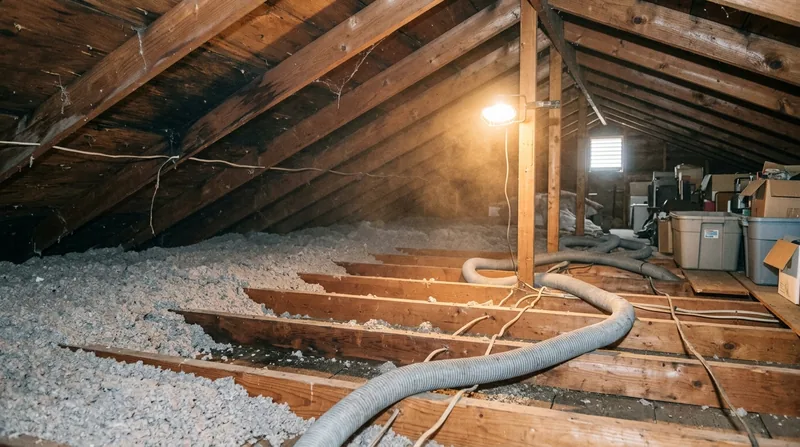




Fargo sits on the flat floor of the Red River Valley, where ice dams and winter moisture drive more failed insulation jobs than anywhere else in the region. Old blown-in batts, water-logged fiberglass, and failed spray foam jobs from contractors who cut corners all end up in attics that swing 160 degrees from summer heat to deep winter cold. Before any new insulation removal in Fargo can happen, the old material has to come out cleanly, safely, and without burying the problem underneath. We vacuum out every inch of compromised fill, cut out failed foam, and flag anything that needs testing before new insulation goes in. The work is straightforward, the stakes are high, and the difference between a proper tearout and a buried mess is everything.
Why Insulation Removal Matters in Fargo's Extreme Climate
Fargo winters drop to 30 below zero for weeks at a time, and every attic in the city sees ice dams form where warm air leaks through old insulation. Moisture-soaked batts lose their R-value entirely and begin to rot the framing underneath. Failed spray foam jobs from installers who rushed the cure, skipped mechanical ventilation, or promised immediate re-entry leave homeowners with odor, off-gassing, and insulation that has separated from the decking. The Red River Valley's heavy clay soil and basement-dependent housing stock means water finds its way into rim joists and crawl spaces, and wet insulation has to come out before anything new goes in.
- We remove all old blown-in and batt insulation before any new foam is sprayed, never buried under fresh material.
- We cut out failed spray foam installations that other contractors will not touch, a job that requires precision and proper equipment.
- We haul away all debris and dispose of it legally, leaving the space clean and ready for the next phase.
- We flag vermiculite for testing if it is present, because it may contain asbestos and must be handled by a licensed professional.
- We inspect the substrate for moisture, roof leaks, or structural damage and will not spray over a wet or contaminated surface.
Proper removal is the foundation of every retrofit job and the only way to ensure new insulation performs as designed.
Key info: A 1950s cape in south Fargo with a balloon-frame wall cavity and failed spray foam from 2015 needs the old foam cut out, the cavity vacuumed clean, and the rim joist inspected for moisture before new closed-cell foam can go in. Skipping removal costs thousands in re-work and wasted material.
How We Remove Insulation: Step by Step in Fargo Homes
Every removal job starts with a walk-through to understand what material is present, how it is accessed, and whether there are health or safety flags. Blown-in fiberglass and cellulose come out with a commercial vacuum truck. Batts are pulled by hand and bagged. Failed foam is cut out section by section using hand tools and careful technique. We wear full PPE, use mechanical ventilation during the entire process, and keep the work area isolated from occupied spaces.
- We inspect the attic or cavity for moisture, roof leaks, and structural condition before any removal begins.
- We set up containment and mechanical ventilation if asbestos or fiberglass dust is a concern.
- We vacuum out all blown-in material or remove batts by hand, depending on the type and condition.
- We cut out failed spray foam in sections, working carefully to avoid damage to the decking or framing.
- We haul all waste to a licensed disposal facility and provide a work summary before we leave.
- We inspect the cleaned cavity and advise on next steps: new foam, blown-in, or a hybrid approach.
The entire process is documented, and you get a clear picture of what came out and what is ready for new insulation.
Local example: A split-entry bi-level in south Fargo with a cantilever rim that leaks at every joist bay had 3 inches of wet fiberglass that had to come out before we could spray closed-cell foam. The removal took one full day, and the new foam was installed three days later. The homeowner now has a sealed rim and no more ice dams at that corner. See our rim joist and band joist spray foam service for the full scope.
Removal Methods: Blown-In, Batts, and Failed Foam
| Method | Description | Best For |
|---|---|---|
| Vacuum removal | Commercial-grade vacuum truck pulls all loose blown-in fiberglass or cellulose into a containment tank, no dust in the home. | Attics with 6 to 12 inches of loose fill, especially if water-damaged or settled. |
| Hand removal of batts | Fiberglass or mineral wool batts are pulled, rolled, and bagged by hand, then disposed of at a licensed facility. | Knee-wall attics, crawl spaces, and older homes where batts are the primary insulation. |
| Failed foam cutout | Polyurethane foam that has separated, off-gassed, or failed is cut out in sections using hand tools and careful technique. | Attics and walls where prior spray foam installation was improper or incomplete. |
| Substrate inspection and preparation | After removal, the decking, framing, and cavity are inspected for moisture, leaks, and structural integrity before new material is installed. | Every job, to ensure the new insulation will perform as designed and last. |
Insulation Removal Cost in Fargo: What to Expect
The cost of insulation removal in Fargo depends on the volume of material, how accessible it is, and whether any special handling is required. A straightforward attic tearout of blown-in fiberglass starts at $950 for a typical 1,200 square foot attic. Larger homes, crawl spaces, or jobs that include failed foam cutout will be higher. Water damage, asbestos flagging, or difficult access can add time and cost. The best approach is to get a written estimate that spells out what is being removed, how much volume, and what the final price will be.
Every estimate is free and comes with no obligation to book. We walk the space, take measurements, and give you a number that reflects the actual work. No surprises, no hidden fees, and no pressure. Call us at (701) 501-6701 to schedule your free estimate, or visit our pricing page for more detail on what removal costs in your area.
Insulation Removal Near Me: What to Look for in a Fargo Contractor
Hiring the right contractor for insulation removal is about more than price. You want someone who will document what comes out, dispose of it legally, and leave the space ready for what comes next. Ask any contractor for references from recent jobs, and verify that they carry full insurance. Understand what permits apply at your address by calling your local building department (Fargo, West Fargo, Horace, or Casselton all have different rules). If your home is in an HOA, check whether architectural approval is needed for any exterior work. Most insulation removal is interior and does not require a permit, but it is worth confirming before work starts.
- Get written estimates from at least two contractors and compare what each one is removing and how they are disposing of it.
- Ask for proof of insurance and contact information for three recent customers in your area.
- Verify that the contractor will not spray new foam until the substrate is dry and any leaks are fixed.
- Confirm that mechanical ventilation will be used during any removal that generates dust or off-gassing.
- Request a detailed work summary and photos of the space after removal and before new insulation is installed.
A contractor who answers your questions clearly and gives you a firm price on paper is the one you can trust to finish the job right. Contact us at (701) 501-6701 or visit our contact page to schedule your free estimate and see how we approach the work.
Once your old insulation is out and the space is clean, you are ready for the next step. Whether you choose attic spray foam insulation, closed-cell foam, or open-cell foam, the foundation is a proper removal. We have been serving Fargo, West Fargo, Horace, and the surrounding area since 2012, and we know the climate and the homes here inside and out.
Insulation Removal in Fargo: Pricing Guide
| Service | Price | Details |
|---|---|---|
| Attic blown-in removal | Starting at $950 | Typical 1,200 square foot attic with 6 to 10 inches of settled fiberglass or cellulose, vacuum removal included |
| Batt removal and disposal | Starting at $1,200 | Knee-wall attics or crawl spaces where batts are hand-pulled, rolled, and hauled to licensed facility |
| Failed spray foam cutout | Starting at $1,500 | Separation, off-gassing, or incomplete foam removed in sections; complexity and volume determine final cost |
| Large or multi-zone removal | On estimate | Attics over 1,500 square feet, multiple cavities, or mixed materials require on-site assessment for accurate pricing |
| Disposal and haul-away | Included | All material removed is disposed of at a licensed facility; no separate charge or hidden fees |
| Free estimate | No obligation | Written estimate within 24 hours, response at (701) 501-6701, covers scope, volume, and final price |
Indicative pricing, the exact cost depends on square footage, finish, and site access. Free personalized estimate within 24h at (701) 501-6701.


