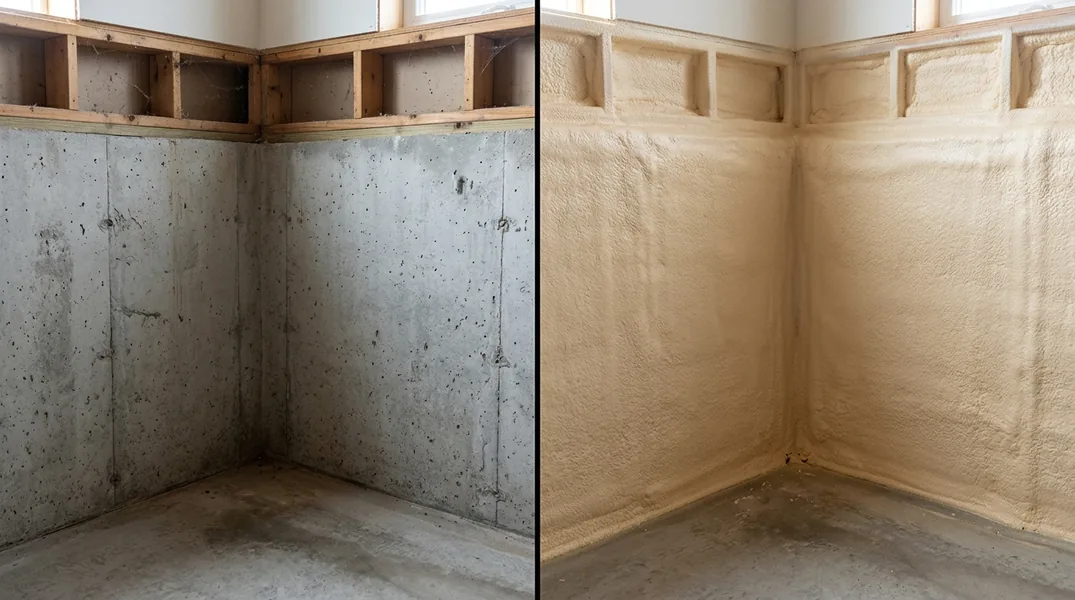
Understanding North Dakota Energy Code Requirements for Attics
If you own a home in Fargo, understanding North Dakota's energy code is the first step toward making smart insulation decisions. The state follows the International Energy Conservation Code (IECC), which sets minimum insulation requirements for residential buildings. These codes are designed to reduce energy consumption, lower utility bills, and create more comfortable living spaces year-round.
North Dakota's climate demands serious attention to attic insulation. With winters that regularly dip well below zero and significant heating demands, your attic is one of the most critical areas to insulate properly. The state's energy code specifies that attics in the Fargo area require an R-value of R-49 to R-60, depending on the specific code year and your home's construction type. This is significantly higher than many older homes currently have, which is why homeowners are increasingly upgrading to modern solutions like Attic Spray Foam Insulation.
The reasoning behind these strict requirements is straightforward: heat loss through an inadequately insulated attic can account for 25 to 30 percent of your home's total heating loss. By meeting or exceeding North Dakota's energy code, you're not just following regulations, you're investing in your home's performance and your family's comfort during those long, harsh winters.
Spray Foam Insulation R-Value Per Inch: How It Compares to Traditional Materials
One of the biggest advantages of spray foam insulation is its superior R-value per inch. This metric measures how effectively a material resists heat transfer. The higher the R-value, the better the insulation performance. Traditional fiberglass batts typically deliver an R-value of 3.2 to 3.8 per inch, while cellulose offers around 3.6 per inch. In contrast, Closed Cell Spray Foam Insulation provides an impressive R-value of 6 to 7 per inch, and Open Cell Spray Foam Insulation delivers approximately 3.6 to 3.8 per inch.
This means that to achieve the R-49 requirement for a Fargo attic using closed cell foam, you would need only 7 to 8 inches of material, compared to 13 to 15 inches of fiberglass batts or cellulose. The space efficiency alone makes spray foam attractive for homeowners with limited attic height or those looking to maximize usable storage space. Additionally, spray foam creates an air-tight seal that eliminates gaps and thermal bridging, problems that plague traditional insulation materials.
When considering how thick spray foam should be in your specific attic, a professional energy audit or consultation is invaluable. The thickness needed depends on your current insulation levels, your home's age, and your local energy code compliance. Fargo Spray Foam Insulation can assess your attic during a free estimate and recommend the optimal thickness for your situation.
How Thick Should Spray Foam Be: Finding the Right Balance
Determining how thick spray foam should be in your attic isn't a one-size-fits-all answer. Several factors influence the ideal thickness, including your current insulation status, your attic's ventilation design, and whether you're upgrading an existing installation or starting fresh. For new construction or major renovations in Fargo, meeting the R-49 to R-60 North Dakota energy code requirement typically means installing 7 to 10 inches of closed cell foam or 13 to 16 inches of open cell foam.
However, if you're upgrading an older home that already has some insulation present, you may need less additional thickness. The key is achieving your target R-value, not necessarily reaching a specific depth. Many homeowners are surprised to learn that adding just 4 to 6 inches of spray foam over existing fiberglass can bring an under-insulated attic into compliance with current codes. This incremental approach can be more budget-friendly while still delivering significant energy savings and comfort improvements.
One important consideration is attic ventilation. Closed cell foam is vapor-impermeable and can be installed directly against roof decking without ventilation concerns. Open cell foam, being more vapor-permeable, typically requires a ventilation space above it. A professional assessment from Fargo Spray Foam Insulation will ensure your installation meets both energy code requirements and proper ventilation standards for your specific attic design.
2026 Insulation Tax Credits and Federal Incentives for Fargo Homeowners
The federal government continues to incentivize home energy efficiency improvements through tax credits. As of 2026, homeowners who upgrade their insulation may qualify for an insulation tax credit under the Inflation Reduction Act. The current program allows homeowners to claim up to 30 percent of the cost of qualifying insulation improvements, with a maximum annual credit of $1,200. This is a substantial incentive that can meaningfully reduce the effective cost of your project.
To qualify for the insulation tax credit, your improvement must meet certain requirements. The insulation must be installed in your primary residence, and it must comply with the energy performance standards set by the Department of Energy. Spray foam insulation typically qualifies, but the specific product and installation must meet these standards. It's important to keep all documentation from your contractor, including receipts, product specifications, and proof of installation, as you'll need these when filing your taxes.
The beauty of the tax credit is that it reduces your federal income tax liability directly, making it more valuable than a deduction. For a homeowner spending $5,000 on spray foam insulation, a 30 percent credit could mean $1,500 back on your taxes. When you combine this with state rebates and utility company incentives, the true out-of-pocket cost of upgrading your insulation becomes significantly lower.
North Dakota and Local Utility Rebates: Maximizing Your Savings
Beyond federal tax credits, North Dakota homeowners have access to rebates through local utility companies and state energy programs. Many electric and natural gas providers offer rebates for insulation upgrades that reduce energy consumption. These rebates are typically offered directly by the utility and can range from a few hundred to several thousand dollars, depending on the scope of work and the utility's current program offerings.
In Fargo, homeowners should contact their local utility provider to inquire about available rebate programs. Some utilities offer instant rebates at the point of purchase, while others provide mail-in rebates after installation is complete. The application process typically requires documentation from a certified contractor, which is another reason to work with an experienced, established company like Fargo Spray Foam Insulation.
Additionally, some North Dakota communities participate in state weatherization assistance programs that may help lower-income homeowners access insulation upgrades at reduced or no cost. The combination of federal tax credits, utility rebates, and potential state assistance can make upgrading to spray foam insulation far more affordable than the sticker price suggests. When you request a free estimate from Fargo Spray Foam Insulation, ask about rebate programs you may qualify for, as our team stays current on available incentives.
Attic Spray Foam Insulation Cost in Fargo: What to Budget for Your Project
The cost of spray foam insulation varies based on several factors, including the type of foam, the thickness required, your attic's square footage, and accessibility. Generally speaking, closed cell spray foam costs more per board foot than open cell, but it delivers superior R-value per inch and provides additional benefits like moisture resistance and structural support. Open cell foam is more budget-friendly upfront and still significantly outperforms traditional insulation materials.
In Fargo, homeowners can expect to pay between $1.50 and $3.00 per board foot for closed cell spray foam installation, or roughly $1.00 to $1.50 per board foot for open cell foam. For a typical 1,500 square foot attic requiring 8 inches of closed cell foam, you might budget $4,000 to $7,000 before incentives. This might sound substantial, but when you factor in the 30 percent federal tax credit, utility rebates, and the long-term energy savings, the effective cost becomes much more reasonable.
One critical point: don't let upfront cost be your only consideration. The cheapest insulation option rarely provides the best value over time. Spray foam's superior performance, longevity, and air-sealing properties mean you'll recoup your investment through lower heating and cooling bills for decades. To understand the true cost of upgrading your specific attic and to explore all available incentives, contact Fargo Spray Foam Insulation at (701) 501-6701 or request a free estimate today.
Taking Action: Next Steps for Fargo Homeowners in 2026
If you're a homeowner in Fargo considering an insulation upgrade, now is an excellent time to act. The combination of federal tax credits, utility rebates, and the proven performance of modern spray foam insulation makes 2026 an ideal year for this investment. Start by scheduling a professional energy assessment to understand your current insulation levels and identify where improvements will have the greatest impact.
Fargo Spray Foam Insulation offers free, no-obligation estimates for homeowners throughout the Fargo area. During your consultation, our team will evaluate your attic, discuss your energy goals, explain North Dakota's energy code requirements, and help you understand which incentives you qualify for. We can also discuss whether Wall & Injection Foam Insulation might benefit your home beyond the attic.
Don't let another winter pass with inadequate insulation and high heating bills. Call Fargo Spray Foam Insulation at (701) 501-6701 or visit our website to schedule your free estimate. We'll help you navigate the codes, maximize your rebates, and ensure your home is properly insulated for North Dakota winters.
Looking for a professional spray foam insulation contractor in Fargo? Fargo Spray Foam Insulation responds fast for all your spray foam insulation needs.
Get a Free Quote